

The Global Shift: Transitioning to the ISO 8100 Series in Vertical Transportation
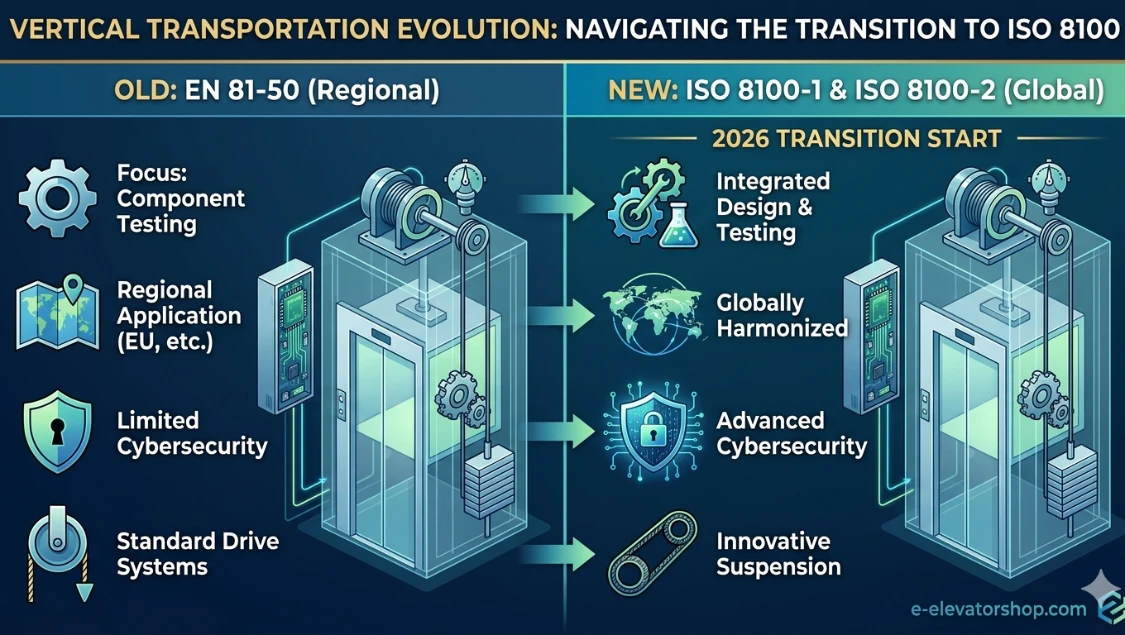
For decades, the elevator industry has relied on regional standards to ensure passenger safety and technical reliability. In Europe and many international markets, EN 81-20 and EN 81-50 have been the gold standard. However, as of March 2026, we are entering a new era of global harmonization with the official publication and implementation of the ISO 8100 series.This transition is more than just a renaming exercise; it represents a unified technical language for manufacturers, installers, and maintenance providers worldwide.
What is the ISO 8100 Series?
The ISO 8100 family is designed to replace the existing EN 81-20/50 framework, effectively "globalizing" the European norms.-
ISO 8100-1: Safety rules for the construction and installation of passenger and goods passenger lifts.
This part covers the design principles and protective measures required for the lift system as a whole.
-
ISO 8100-2: Design rules, calculations, examinations, and tests of lift components.
This is the technical backbone for manufacturers of safety components like buffers, safety gears, and speed governors.
Key Technical Changes in 2026
While the ISO 8100 series carries over many proven safety requirements from its predecessors, the 2026 updates introduce several critical enhancements:-
Cybersecurity Integration: For the first time, standards are aligning with ISO 8102-20, addressing the growing risks associated with internet-connected elevator controllers and remote monitoring systems.
-
Advanced Door Safety: New specifications target the prevention of finger and hand injuries, especially for vertically and horizontally sliding doors.
-
Alternative Suspension Systems: The standard now provides clearer pathways for the approval of non-traditional load-bearing devices, such as carbon fiber belts and coated steel ropes, beyond traditional steel wire cables.
-
Functional Safety (SIL): There is an extensive revision of requirements for Programmable Electronic Systems in Safety Related Applications (PESSRAL), now more strictly defined under Safety Integrity Levels (SIL).
-
Emergency Operations: Updated requirements for automatic emergency release operations after a power failure ensure higher passenger comfort and safety during outages.
Timeline for Implementation
The industry is currently in a critical transition period. Although ISO 8100-1 and 8100-2 were published earlier as international standards, their adoption as EN ISO 8100 in Europe (and subsequent harmonization) follows a specific roadmap:-
March 1, 2026: Official publication of the updated EN ISO 8100-1/2 standards.
-
Late 2026: Expected harmonization in the Official Journal of the EU, making them "Designated Standards."
-
Three-Year Transition: Manufacturers generally have a three-year window to update their technical documentation and re-certify components before older EN 81-20/50 certificates become obsolete.
Why This Matters for Your Business
For developers and engineers, this shift simplifies international trade.As we move toward more "intelligent" buildings, staying ahead of these regulatory changes is not just about compliance—it is about leveraging the latest in safety technology and cybersecurity to provide more reliable vertical transportation solutions.